xilopango

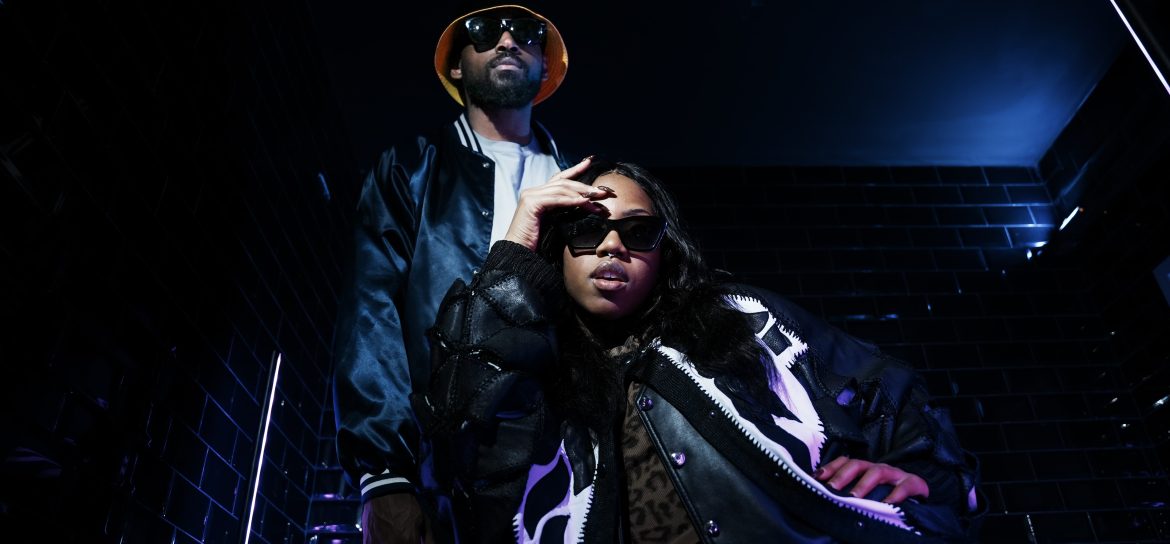
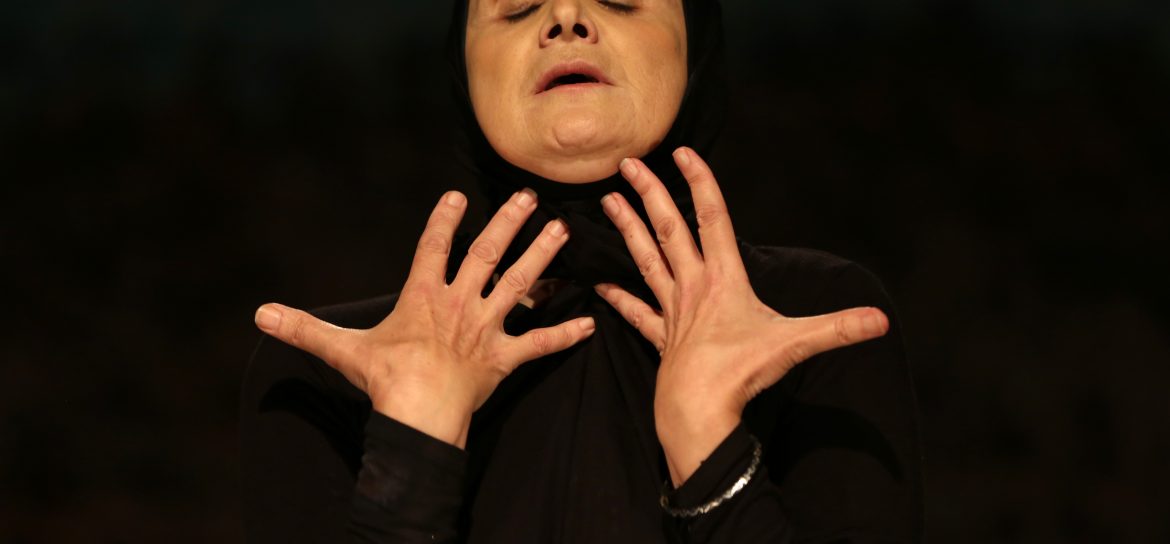
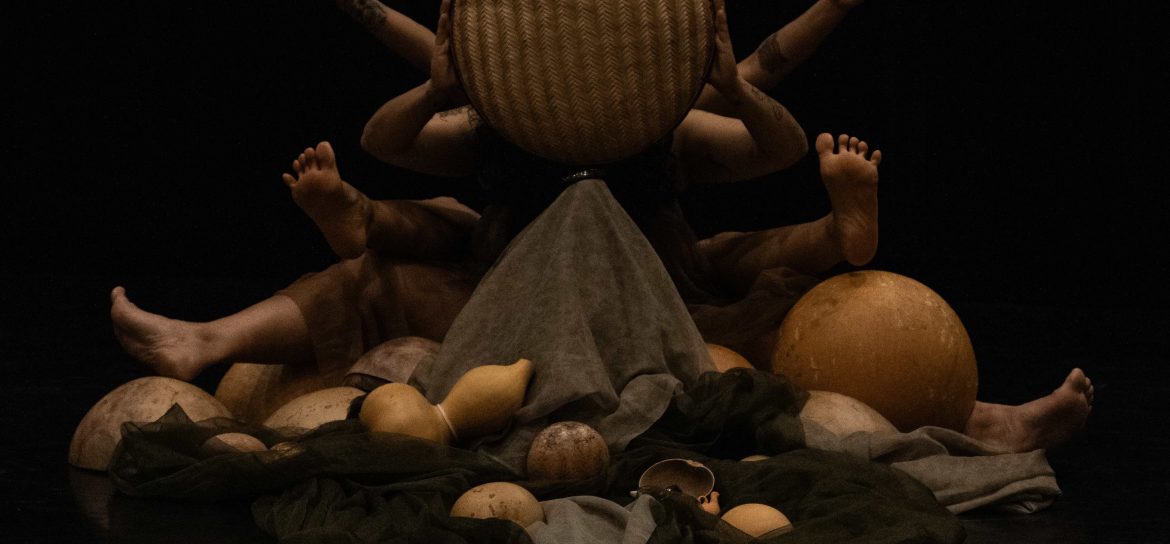
Carried by breath, ritual, and grounded choreography, Xilopango is a contemporary dance production that reflects the artist’s maternal lineage. It traverses the lives of Villafuerte’s great-grandmother, an Indigenous seamstress who raised fourteen children; her grandmother, a nurse who was forcibly disappeared during the Salvadorian civil war; her mother, a political activist who fled military persecution and resettled in Canada; and the artist herself, a daughter of diaspora who bears the weight of their stories in her body. But this is not just personal history. It speaks to a broader, embodied experience shared by many Salvadorians. The work transforms grief into connection and invites the audience to witness a return—not only to place, but to self, to memory, and to love. Told through the voice of the Land itself, it is a tender excavation of the quiet strength that endures from one generation to the next.


Talkback with the artist following the February 13th performance
Hosted by Sundus Abdul-Hadi


Content warning : nudity


as i must live it

As I Must Live It is a humorous and heartfelt performance from award-winning spoken word artist Luke Reece. Through poetic storytelling touching on everything from antagonistic squirrels to Chris Pratt’s abs, it traces one man’s experience growing up in a mixed-race family with a mentally ill father. Get ready for deft wordplay as Reece brings the page to the stage for an intimate, pun-filled event. With sharp wit and tender reflection, this show navigates memory, masculinity, and the everyday absurdities that shape us.

The February 27th performance will be followed by a talkback with the artist hosted by Adjani Poirier. 


All performances of As I Must Live It are presented in a relaxed environment. To download the Show Guide, click here.


Co-produced by Theatre Passe Muraille and Modern Times Stage Company

Produced by permission of the playwright and Marquis Literary (Colin Rivers) www.MQlit.ca
Luke Reece is a member of the Playwrights Guild of Canada

The show was translated in French thanks to the generous contribution of the Cole Foundation.
Translation to French by: Sunny Doyle

beat matched

Duc Nguyen Huu

The evolution of the Catch Step universe continues with Beat Matched, a new chapter in their ongoing creative union. RISE, Djüngle, and VicVersa deepen their exploration of the art of remixing, where ideas and material are transformed without ever being lost. Past processes produce the materials that inspire, inform, and shape the new process. RISE and Djüngle delve into their own fields of interest as individual artists, as well as a collective. In this new iteration, the two artists find themselves propelled into the role of creative directors within a continuum composed of movement, sound, visuals, math, and (as always)… chairs.

omaagomaan

© Dahlia Katz

Waawaate Fobister, a proud Anishnaabe from Grassy Narrows First Nation, is an actor, dancer, playwright, choreographer, instructor, and producer. In their work Omaagomaan, the multiple Dora-award-winning artist uses sound, movement, dance, and storytelling to embody Omaagomaan, a non-binary, two-spirit being who, in Anishinaabe cosmology and knowledge, represents the earth as well as the poisonous toxins humans have pushed into it. Omaagomaan themselves incorporates both beauty (onishishin = beautiful) and ugliness (maanaadizi = ugly). Fobister connects this collision of the beautiful and the ugly to the resilience of the Anishinaabe people, as they stitch back together fractured landscapes poisoned by mercury.


Talkback on February 9th after the performance hosted by Dominique Ireland.
Post-show discussion in English and ASL.
Two ASL interpreters will also be present before and after the show.


credits

Interpreter: Waawaate Fobister
Costume Design: Sage Paul
Lighting Design : Pierre Lavoie
Rehearsal Director: Carlos Rivera Martinez
Sound Design: Marc Merilainen
Original Direction: Troy Emery Twigg
2022 Remount Direction: Patti Shaughnessy
Anishinaabe and Clown Consultant: Don Kavanaugh

creatrix

© Roxanne Ross

Dancer and visual artist Mona El Husseini is interested in how stories are transmitted, shared, and told through the body across generations. Where do we meet and where do we part? How do we collaboratively give voice to our shared past? Creatrix, a dance duet between El Husseini and her mother, Hala Farahat, interweaves improvisation, gestural interpretation, abstracting the Egyptian Baladi dance, and storytelling. While Mona is an artist, her mother Hala is a medical doctor, science teacher, and a mother of three who is not trained in dance. Where their opposing worlds meet, they search together for the common denominator across art and science, motherhood and girlhood, past and present.

A series of visual art titled Family Portraits by Mona El Husseini will be displayed for viewing in the MAI café-bar before and after each performance. The exhibition will be accompanied by a zine, which will be available for purchase.

→ Creatrix After Party
December 2nd, 8:30pm
To celebrate the culmination of over three years of artistic elaboration and most importantly, a world premiere at the MAI, Mona and Hala extend a warm invitation to spectators, friends, and family to join them in a celebration in the MAI café-bar following the last performance on December 2nd. Featuring all of the songs that Hala wanted to include in the show but were ultimately reserved for rehearsal warm-ups. Come dance to Hala’s favourite songs, mixed by the talented Lara Barazi.


press review

City News Montreal
Bible Urbaine
CBC Let’s Go


credits

Performers: Mona El Husseini, Hala Farahat
Choreography: Mona El Husseini
Light Design: Nien-Tzu Weng
Technical Director : Darah Miah
Music: Wael Kodeih + Love & Revenge
Dramaturgical Consultant: Fatma Sarah El Kashef
Costume Consultant: Sophie El-Assaad
Outside Eye: Corinne Skaff

artist biographies

Mona El Husseini is a dancer and visual artist, based between Montreal and Cairo. She completed her dance education at the Cairo Contemporary Dance Center (CCDC) in Egypt and studied International Business and Contemporary Dance at Concordia University.

Mona choreographs and performs her own artistic projects, she collaborates with other artists as a choreographer and performer, and she also teaches contemporary dance, barre, and pilates. Her pieces have been performed in Egypt, Germany, Italy, and Canada.

At the time of writing, Mona is working on Creatrix, a dance duet with her mother, and on Family Portraits, a visual art series and a graphic memoir set to premiere at the MAI (Montréal, Arts Interculturels) in 2023. She is also developing Monday or Tuesday, a dance solo, and Rabbet Manzel // House Goddess, a visual art series – both of which were presented at upRising Up festival in Puglia, Italy, in 2022. In 2018, Mona had a performing role in When Arabs Danced, a TIFF- and FIFA-featured documentary film by Jawad Rhalib, and in 2022, she was the lead actress in Gigi and in Mango, two short films by director Randa Ali. That same year she choreographed Mama, a theatre piece by Nathalie Doummar, which was presented at Théâtre Duceppe and at Festival Juste Pour Rire in Montreal.

In her artistic process, Mona goes beyond dance and traces the thread that connects the different art forms she practices including martial arts, visual arts, and writing. She is interested in how stories are transmitted, shared, and told through the body across generations. She finds the dance in the encounter between the intimate and the collective, the traditional and the contemporary, and in the space where the inner and outer meet.

Hala Farahat is a Biology teacher based in Montreal, Canada. After giving up her medical career to raise her children, she has held diversified teaching and administrative positions in International schools in the U.A.E, Egypt, Ontario, Quebec, and most recently in New York. She completed her Bachelor’s degree in Education at the University of Ottawa and her Master’s degree in Educational Technology at Concordia University. Among many things, she is a passionate advocate for the implementation of technology to promote pedagogical strategies and enhance students’ engagement through creating flipped classrooms and project-based learning. Besides that, she is an avid practitioner of conjoining the worlds of Art and Science, both in her classrooms and out.
les formes qui nous traversent (suspended indefinitely)

© Johanna Moya

 — This performance is suspended indefinitely. See MAI’s latest updates related to COVID-19. — 

Les formes qui nous traversent unearths thirty hand-written log books recording a long period of isolation. Imagined and created by the spoken-word poet Hoda Adra, this film-concert sees her take the stage after leaving the land of Brumania, a fictitious country where pink blobs choke the voices of its people . It’s the story of the birth of a voice, oscillating between shyness, self-censorship, seduction, humour, awkwardness, shame, urgency, satire…as if it were taking its first steps. Suddenly, a fluorescent pink shape  appears: the phantom Ghostwriter. It haunts the kitchen each night and fills page after page with existential theories. Writing becomes an experience of returning to oneself, shared as an act of resistance.

Hoda Adra is a recipient of MAI (Montréal, arts interculturels)’s Alliance program.

Produced with the support from the Government of Québec and the City of Montréal
as part of l’Entente sur le développement culturel de Montréal, and from the Canada
Council for the Arts

tuning in

© Meags Fitzgerald

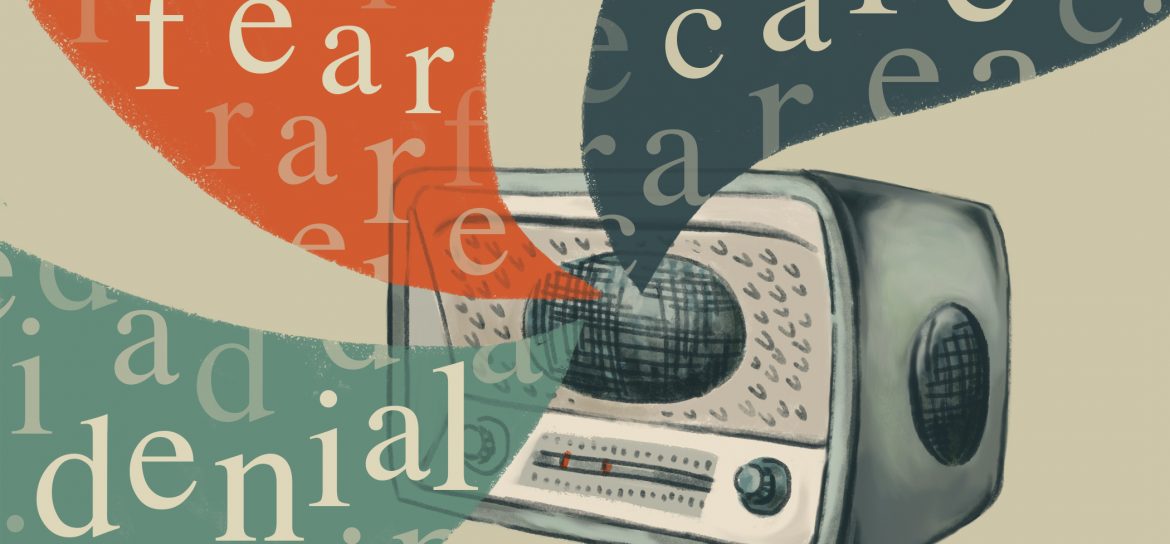
Co-presented with the MAI, Tuning In is a commissioned series of three new, short audio plays penned by women playwrights from across Canada. Tuning In tackles issues of denial, fear and care. Three Canadian women playwrights explore the perspectives that reflect our personal realities and also the truths that bind us together. The series invites us to question the human experience and how society shapes us.


For more information: https://www.imagotheatre.ca/tuning-in

No ticket reservation need.
The livestream will be available directly from aboved link during the days of the streaming.


jogging

Jogging
© Marwan Tahtah

Hanane is a woman in her 50s who goes for a jog every day in the streets of Beirut, warding off osteoporosis, obesity and depression. As she runs, she revisits her dreams, desires and disillusions. This daily routine has contradictory effects: it stimulates two hormones in her body – dopamine and adrenaline – which are, by turns, destructive and constructive, against the backdrop of a city which destroys in order to build and builds in order to destroy. Alone on stage, Hanane, wife and mother, unveils her identity as she embodies different faces of Medea. Actress, author and cultural activist, Hanane Hajj Ali is an eminent figure in the Lebanese cultural and artistic scene.

white [ariane]

White Ariane
© Bas de Brouwer

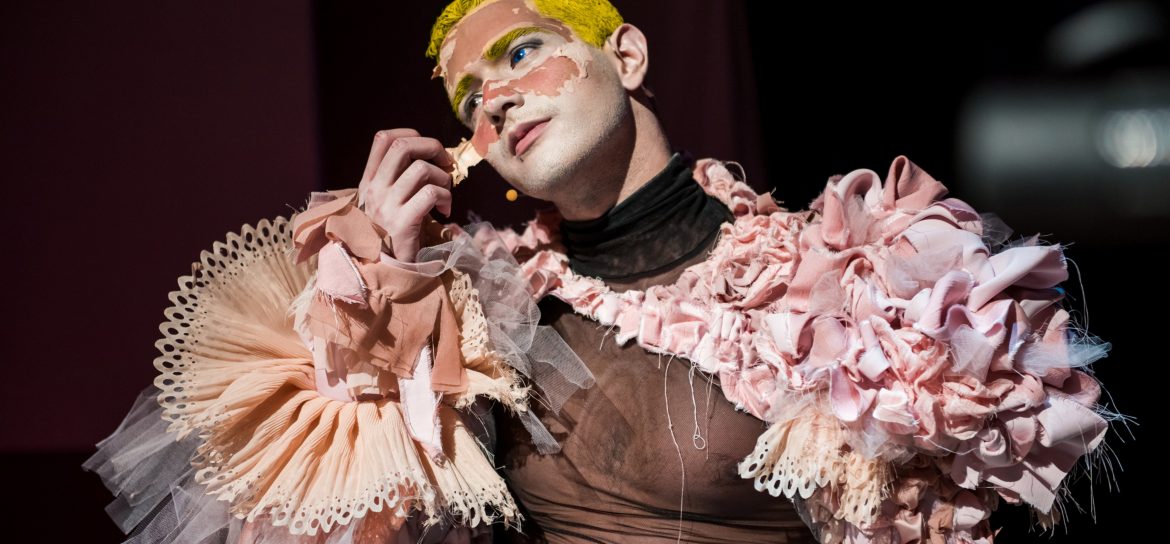
ARIANE is the daughter that Nancy (a South American woman) never had. Nancy wrote a diary for ARIANE while she was inside her womb without knowing that she would be a boy. 28 years after the birth, Nancy crossed over the Atlantic to reveal the existence of the diary to her son. ARIAH LESTER (Lester Arias) takes the words from his mother’s diary and creates songs out of them. A space of (in)betweenness: monstrosity / beauty, feminine / masculine, light / darkness, concert / theatre, opera / burlesque, ARIANE / LESTER / ARIAH.

red(z) maid(z) (cancelled)

Red(z) Maid(z)
© Ashley_Bomberry_

Red(z) Maid(z) is situated within a residential school where 2-spirited Anishinaabe children use their queer imaginations to play out the sadistic abuse they face daily. Their game transforms from innocent role-playing to a plot for murder. Inspired by Jean Genet’s The Maids, in Ojibwe and English, repossesses colonial forms from an autonomously Indigenous perspective. Taking control of the narrative, the children reimagine their maltreatment on their own terms, centering the innocence, imagination, and resilience of Indigenous youth. Award-winning theatre makers Waawaate Fobister and Jesse Stong use absurdism, physicality, and play to draw out Genet’s themes of servitude, oppression, and revenge within Turtle Island’s lineage of colonial violence.