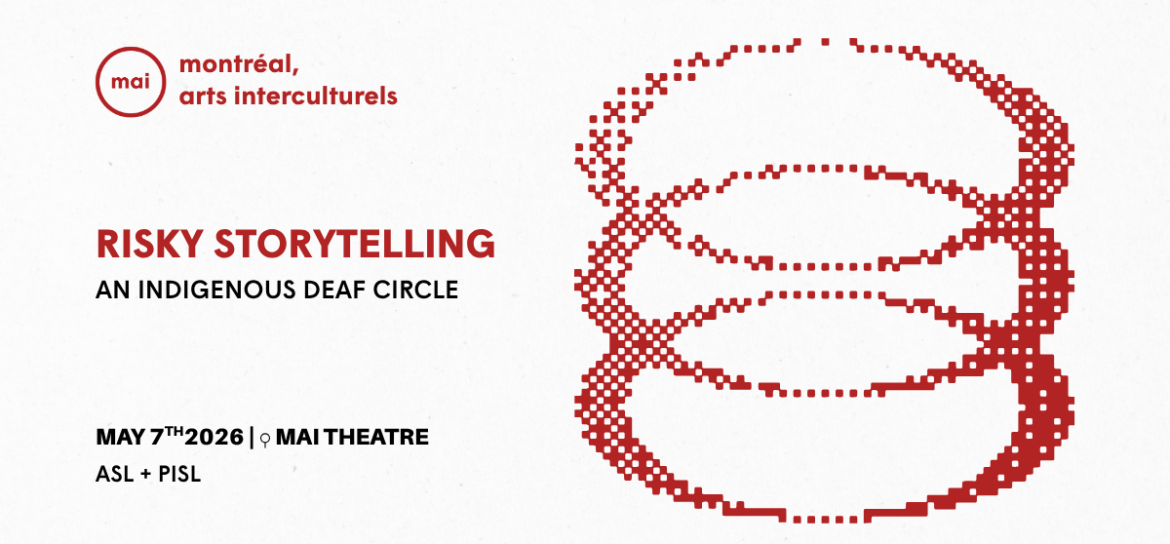
Join us for a drop-in conversation circle, led by a visiting Indigenous Deaf artist, on telling stories with intention. This workshop has a flexible format informed in the moment by health, weather, and who chooses to sit with us.
Carbon Movements is an example of risky storytelling undertaken by already-marginalized artists. Connor portrays the journey of an alienated Deaf settler rediscovering and reigniting their relationship with the land. This would not be possible without the guidance of Chad Wolfe and the Nehiyaw insight he brings to this work. This performance becomes a model for non-Indigenous community members to continue deepening their understanding of Treaty responsibilities, and taking actions of Reconciliation even further.
Facilitated by Chad Running Bear Wolfe.
Workshop design by The Invisible Practice.
FOR: Deaf/hard of hearing/hearing artists, and Deaf/hard of hearing/hearing Indigenous community members.
ACCESS: Facilitation is in Plains Indian Sign Language and American Sign Language.
Participants must request if they require the following access:
- ASL to spoken English interpretation
- ASL to LSQ interpretation
- ASL to spoken French interpretation
- DeafBlind interpreter and/or co-navigator
WHAT TO BRING:
- Personal water bottle.
- Comfortable clothes for movement work. They may get dirty but all materials used in Carbon Movements wash out in laundry.
- A notebook or device for recording your personal thoughts and reflections.
Tough and authentic conversations around Truth & Reconciliation are not often available to the Deaf community. By bringing together community members and Indigenous Deaf peers, we can foster deeper bonds of understanding, support, and – critically – action.
While Carbon Movements features a white settler-descendant performer, the layers of storytelling reveal a profound journey from disconnection to unity. This serves as a metaphorical model for non-Indigenous members of the Deaf community.
Using Carbon Movements as an example of an unorthodox and risky approach to Reconciliation, we encourage other Deaf artists to consider how Indigenous worldviews and values can be integrated into their practices.