laura caraballo

Felipe Velasco

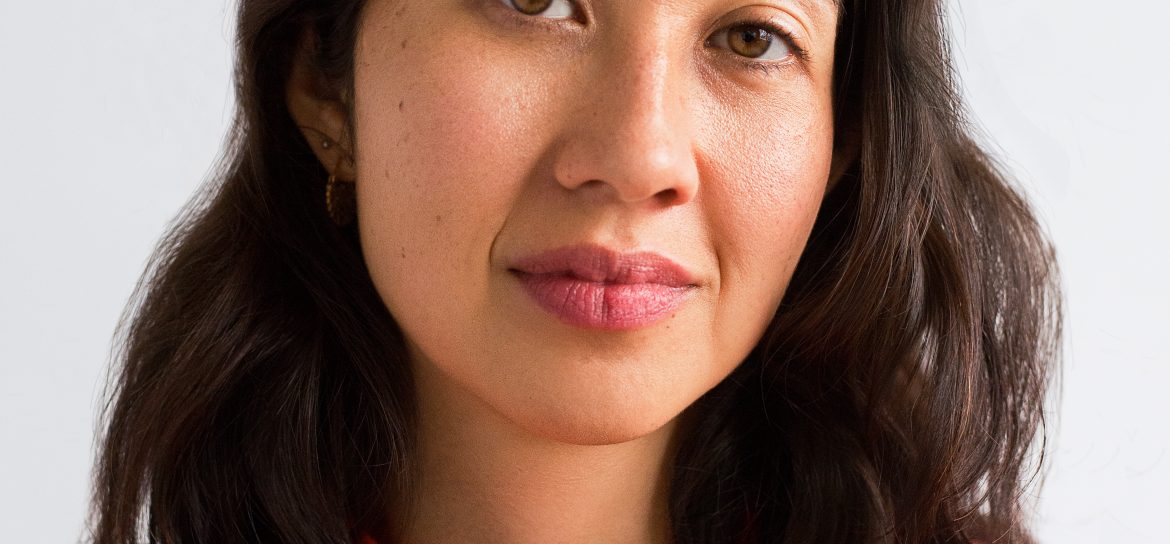
Laura Caraballo is an interdisciplinary artist born in Bacatá [Bogotá] and based in Tiohtià:ke [Montréal]. Her work explores the use of technology to reimagine and create interactive and sensorial, physical, and virtual spaces that represent and engage communities in meaningful conversations. She is particularly interested in examining how we shape, and are shaped by, the spaces we inhabit within a temporal context while exploring themes of home, memory and consciousness.

Deeply influenced by her upbringing in Bogotá, Laura infuses satire and grunge into her work as a means of processing emotions and experiences. Her time in Montréal has further shaped her career, encouraging a bold embrace of experimental aesthetics and unconventional narratives.

Laura works with a variety of new media art forms, including 3D sculpting, virtual reality, and mixed-media installations, with experimentation as the cornerstone of her practice. She views new media art as a powerful tool for cultural retrieval, resilience, and preservation, particularly for those in the diaspora, creating accessible spaces for connection and knowledge-sharing.

For the PRIM | MAI residency Laura seeks to develop her next project “Tributo A un Perro Libre” a two-channel two-voice audiovisual installation exploring the dynamic interplay between adhd and courage in the context of immigration.

“Tributo A un Perro Libre” is the story of a dog full of dreams. A dog born into a dog-eat-dog world. But this dog doesn’t bite. This dog has ADHD. Misunderstood. Misplaced. Overflowing with love. Overflowing with fear. But above all else, always a free dog.

amaralina ramalho alvarez

© Vladim Villain

Amaralina Ramalho Alvarez is a multidisciplinary artist who lives and works in Tiohtià:ke/Mooniyang/Montreal. Her practice explores the political dimension of the ephemeral and of transmission, questioning the relationships between time, memory, and the body. She has participated in several group exhibitions, including Souviens-toi de nous quand tu regardes, presented in partnership with LABARD and the Georges-Vanier Cultural Centre. Her work has also been featured at the RIPA — Performance actuelle festival, in a public art project led with the City of Chambly, as well as at the 8th edition of the Artch Festival at Place Ville Marie. In 2027, she will present her first solo exhibition at the Georges-Vanier Cultural Centre. Amaralina also works as an illustrator and cultural mediator, and she is currently completing her studies in Visual and Media Arts at the Université du Québec à Montréal.

Her project addresses the continuities of colonial dynamics through past and contemporary agricultural systems, drawing parallels between the commercialization of tropical fruits – particularly those from Latin America – and the dynamics of local trade and agriculture.
It unfolds through three interconnected components: archival research, a residency in an agricultural setting, and the activation of a repurposed fruit cart conceived as a mobile space for creation, mediation, and poetic resistance.

abeer dagher esber

Abeer Dagher Esber is a Syrian writer and filmmaker based in Montreal. Her multidisciplinary practice bridges literature, cinema, and visual art, exploring how memory, exile, and architecture intertwine to shape personal and collective identity. A graduate of Damascus University in English Literature, she has authored several Arabic novels—including Freefall (سقوط حر) and Inheritors of Silence (ورثة الصمت)—and has worked in film and television production across Damascus, Beirut, and Montreal. Her current project, The Ninth Step, is a hybrid feature film combining fiction, documentary, and photo-roman aesthetics. Set between Damascus and Montreal, the film follows a woman who reconstructs fragments of her past—love, betrayal, and disappearance—through the architecture of both cities. Using still photography, voiceover, and layered sound design, The Ninth Step explores how urban space becomes an archive of trauma and desire, and how remembering itself becomes an act of survival. Blurring the lines between personal testimony and cinematic essay, Abeer Dagher Esber’s
work continues to investigate the fragile geographies of belonging, questioning how memory inhabits both the body and the city.

leah evangelista woolner

Leah Evangelista Woolner is a Filipina-Canadian visual artist and community organizer. Her artistic practice explores themes of belonging, desire, storytelling, and relationships with the natural world through painting, mixed media collage, and video installation. Leah continues to (un)learn and be inspired by her relationships with diasporic communities and interspecies beings. She holds a Bachelors of Fine Arts from Concordia University (2012) and lives in Montreal.

Her project explores the materials, symbols, and imagery of woven textiles from the Philippines. Through her artistic practice, she is curious about the embodied practices, cultural memory, and ecological relationships illustrated through the content and materials of these fabrics.

nicolas fattouh

Nicolas Fattouh is an emerging theatre artist, visual artist, and animation director who recently relocated from Monsef, Lebanon, to Montreal, Canada. He has participated in over 30 local and international art exhibitions and auctions with his paintings, sculptures, and installations, including at Bonhams (London) in 2016.

Nicolas’s love for theatre began at the age of 8 when he directed small plays with the help of his sisters and school friends, performing them for parents and neighbors in his backyard. Passionate about storytelling and drawing, he pursued his education in 2D/3D animation at the Académie Libanaise des Beaux-Arts, graduating with a master’s degree (first in his class) in 2017.

In 2021, Nicolas made his theatrical debut with his first professional hybrid play, “Living with a Piece of Furniture”, which aimed to make history by helping his 95-year-old grandmother become the eldest president of the Sorority of the Immaculate Conception in her village. The play was selected in many festivals including the Zoukak Sidewalks Festival (Beirut) in December 2022 and the Zürcher Theater Spektakel (Switzerland) in August 2023.

transpacific express

Meeting in China through a McGill language exchange program, Elsasoa Jousse and Frantz Lin created Transpacific Express (TE) over their mutual interest in Asian and African American solidarity movements of the 60s and Asian-language hip-hop. TE continues the spirit of these historical predecessors in celebrating and building linkages between global BIPOC youth cultures. The collective launched its first music curation event in Fall 2019 with inaugural keynotes from scholars of global Asian media, showcasing its sincere and serious approach to pop culture deeply informed by media and cultural studies.

Transpacific Express are El, Frantz, and Celia Benhocine, lifelong musicians trained in classical, jazz, and r&b. In the five years since its inception, TE has integrated into the Montreal cultural milieu with commissioned works in music curation and performance for MAI, Festival Accès Asie, YATAI MTL, POCHA MTL, Korea And The Youth Culture Festival, and the RIDM International Documentary Festival. These performances have taken the form of DJ sets with MCing and singing, as well as artist talks on music history. In events produced by the collective, TE pushes for sonic-visual integration through simultaneous DJing and VJing with anime-style figurative visuals.

Currently, TE aims to further develop its capacity for embodied visual expression to build a more interdisciplinary media practice, on top of music as its core discipline. By doing so, the collective aims to amplify its unique approach to global pop culture that emphasizes the mutual convergences between Black Atlantic music & dance and East Asian visual culture, seeking to break from silo-ed perceptions of its work as serving any single demographic community.

gabriela de andrade

Brazilian artist based in Tio’tia:ke/Montreal, Gabriela de Andrade explores the intimate narratives of people with singular journeys through her work. Her films often tinged with a confessional dimension, and are interested in themes such as nomadism, borders, dissent, emotional ties, and distance. The voices, especially those of women, are at the heart of her work. Inspired by the transformative power of sound, the artist shapes the visual. The sound installation becomes a powerful narrative instrument, transforming everyday life into a dreamlike and subjective visual exploration.

The MAI + PRIM residency will allow Gabriela to continue her experimentations and develop a more intimate and impactful visual language. His project combines contemporary art and cultural mediation. In close collaboration with Exeko, an organization that works on social inclusion through art and philosophy, the artist offers workshops to create a space for expression to a group of women living or having lived in a homeless or socially precarious situation. It is through the voice of these women, which the artist chooses to amplify, that the creation and exhibition of an immersive multi-screen work presented at MAI will take place during the 2024-2025 season.

marwan sekkat

Marwan Sekkat is a Franco-Moroccan interdisciplinary artist living in Quebec. Simulation, the living, subversion, the erroneous and the absurd are at the heart of his practice. Although digital technology is not central to his work, it serves as an ideal ally and tool for questioning our (his) contemporary world. His preferred mediums therefore range from installation to rap, simulation, virtual reality, glitch, VJing, subversion and the creation of real-time visuals. His recent projects involve setting up installations that explore notions of time, modernity and progress. Just as a video game provides us with a simulation of reality, he attempts to create a simulacra of what is real by concealing the digital using techniques such as cabinetmaking, textile work or botany. Fascinated by what is experimental, he hopes his works might provide a moment of sensibility to the public.

Transmission is a summary of his research-creation work around themes of intimacy and intra-familial transmission. By contrasting his artistic practice with traditional Moroccan craft practices, Marwan seeks to question and deconstruct his relationship with his identity. These works explore intergenerational transmission, cultural heritage and the notion of leaving a trace.

Website : marwansekkat.art
Photo credit: Taken during a Jano Lapin residency by Chris Mackenzie

tam khoa vu

The PRIM Centre and the MAI have partnered to offer long-term joint support to an artist wishing to experiment, develop their skills and create work in the field of media arts. PRIM provides the artist with filming equipment and facilities for the production of a work in video art, documentary, fiction, and audio art. The selected artist will be offered the opportunity to present their work in the MAI spaces as part of the official program during the 23-24 season.

Tam Khoa Vu is an artist based in Tiohtià:ke / Montreal. His work challenges common representations and depictions of Vietnamese and Vietnamese-Canadian identity, while playfully opening up spaces of abundance, possibility, and nuance. Using various visual and digital art forms, his practice explores themes of production, manufacturing, power, representation, and identity by exploring the nuances of the “third space” resulting from the diasporic experience between Vietnam and Canada. Notable presentations of the artist’s works include MAI – Justice Project (2022), Montreal, QC (2022); ARTCH Emerging Artists Exhibition, Montreal, QC (2021), Eastern Bloc, Montreal, QC (2016). He has received grants from funding bodies and institutions such as OBORO (2022), Conseil des arts et des lettres du Québec (2022, 2021), and the MAI (2022). In 2017, he completed his BFA at Concordia University in Design and Computation Arts.